Noah Meier · 2 September 2026
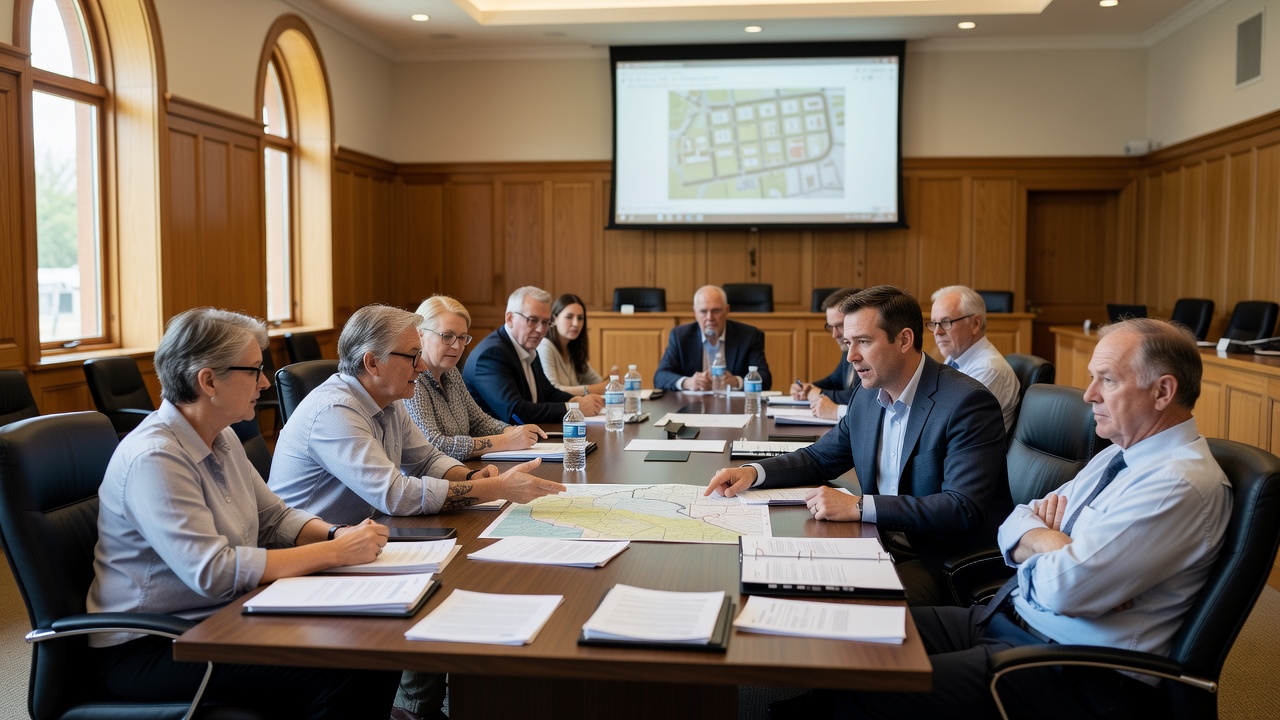
The Lowvale Town Council convened its monthly session last Tuesday to deliberate on multiple zoning proposals that could reshape development patterns across the municipality. With the town's population steadily rising, officials are seeking ways to manage expansion while maintaining quality of life for residents. The meeting drew a crowd of concerned citizens eager to voice their opinions on the future direction of Lowvale.
Details of the Zoning Proposals
Among the key proposals is a plan to rezone approximately 150 acres of land currently designated for agriculture into areas suitable for residential and light commercial use. This would allow for the construction of new housing developments, including single-family homes and townhouses, potentially adding several hundred new residents to the area. Proponents argue that this change is necessary to address housing shortages and support local businesses by increasing the customer base. Environmental impact reports were presented, outlining measures to protect nearby streams and wildlife corridors through buffer zones and green spaces. Another significant proposal involves permitting small-scale industrial operations in specific zones near the highway. This could attract companies in logistics and light manufacturing, creating job opportunities for local workers. Council members reviewed traffic studies showing minimal additional congestion if proper access roads are built. Additionally, updates to short-term rental policies were discussed, aiming to limit the number of vacation rentals in family neighborhoods to reduce disturbances. Incentives for energy-efficient building designs were also on the table, encouraging developers to incorporate solar panels and sustainable materials.
Deliberations, Public Input, and Future Steps
Council discussions centered on the balance between economic growth and community preservation. Several members expressed caution about overdevelopment, citing past experiences in neighboring towns where rapid changes led to strained services. Mayor Thompson highlighted the importance of updating the comprehensive plan to reflect current needs. Public participation was robust, with residents raising issues such as school overcrowding, water resource management, and the preservation of Lowvale's rural charm. A local farmer spoke against converting agricultural land, while a real estate developer praised the opportunities for affordable housing projects. The council decided to establish a special committee to analyze the proposals in depth, incorporating feedback from experts and the community. Further meetings are scheduled, with a final vote anticipated within six weeks. This review process underscores the town's commitment to thoughtful planning that benefits all stakeholders. As Lowvale continues to evolve, these zoning decisions will play a crucial role in defining its identity and prosperity for years to come.